
MARSH Town Hall on July 9, and What Lawmakers Heard About DHS Revalidation
MARSH is hosting a town hall in Eagan on Thursday, July 9, and a recent legislative oversight hearing brought the Revalidate 2026 disenrollments directly before lawmakers. Here is what is happening, what providers and families told the committee, and how you can take part.
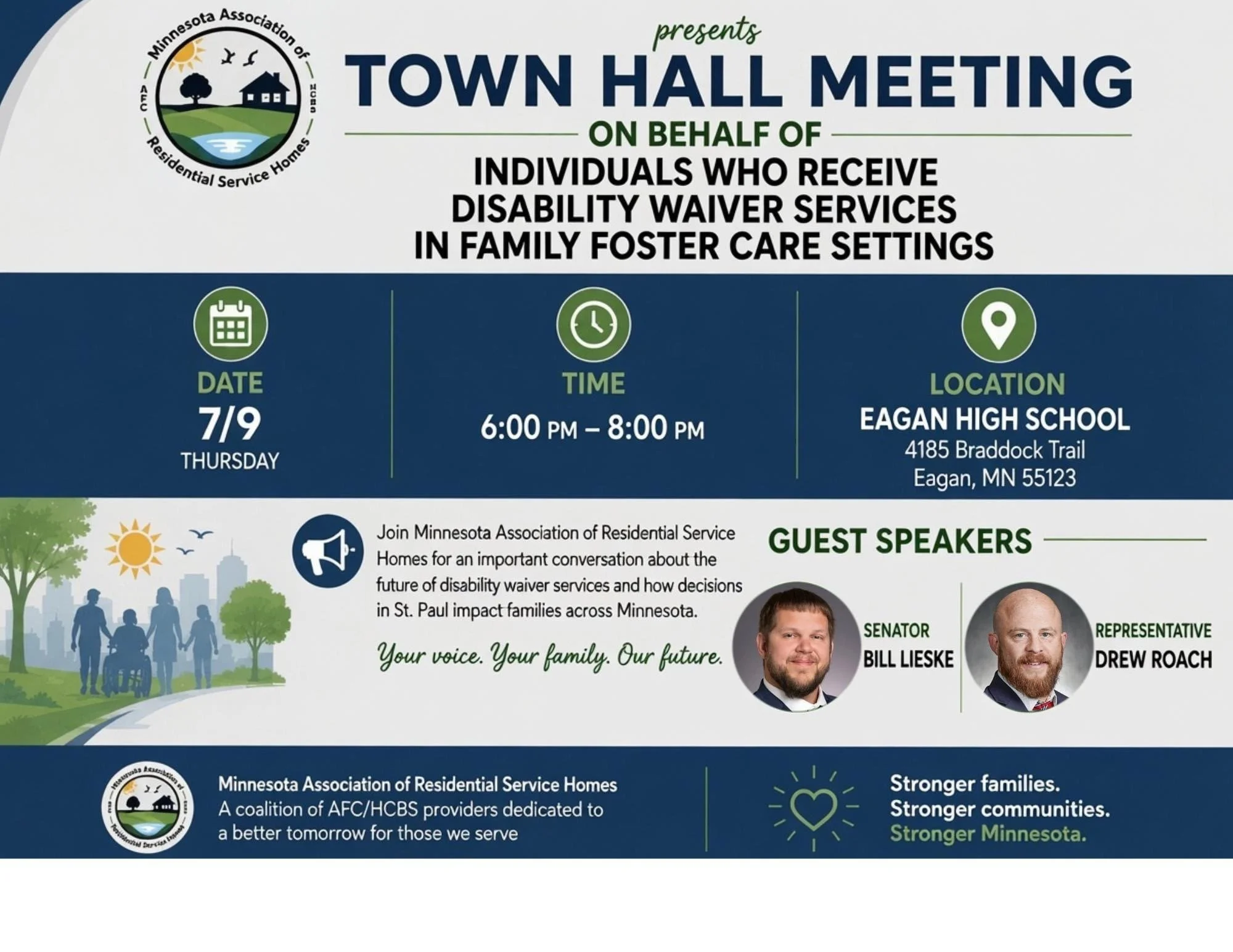
Town Hall Meeting, Thursday, July 9 in Eagan
MARSH is presenting a town hall on behalf of individuals who receive disability waiver services in family foster care settings. Join us for an important conversation about the future of disability waiver services and how decisions in St. Paul affect families across Minnesota.
July 9, 2026
4185 Braddock Trail
Eagan, MN 55123
Guest speakers:
Your voice. Your family. Our future. We hope to see you there.
Watch: The Legislative Hearing on DHS Revalidation
The House and Senate Human Services committees held an oversight hearing on the Revalidate 2026 process. DHS leadership presented an update, and providers, advocates, families, and counties testified about the real world impact. You can watch the full recording below.
What the Numbers Showed
DHS described a process driven by federal direction and a compressed timeline. The scope was large and the outcomes were severe.
The department reported that about 38 percent of providers, roughly 2,000, were revalidated successfully by the May 31 deadline. As of the hearing, fewer than 600 providers had not yet appealed, and DHS urged them to do so to keep their ability to serve and bill. The work was carried out under the threat of a federal funding withholding of about 2.1 billion dollars.
What Providers and Families Told the Committee
Testimony made the human cost of this process clear. A few themes stood out.
Long serving providers were terminated despite completing revalidation. A family residential provider in Wright County who has served since 1988 completed her revalidation and still received a termination letter. A northern Minnesota nonprofit that submitted its revalidation by early March was disenrolled and had its payments suspended, including for a program that was not on the list of 13 high risk services.
Site visits and portal problems caused avoidable failures. Providers described site visits conducted at the wrong address, terminations for technical record issues that could have been resolved in minutes, portal glitches, and documents that went missing in the system.
FRS and CRS homes were swept in even though they were not listed as high risk. Senator Bill Lieske raised that his constituents' family residential and community residential homes were being disenrolled, in some cases because unrelated services grouped on the same record pulled the entire record into the process. He described 14 providers in his district who submitted paperwork well in advance yet never received a site visit before being terminated.
Families felt the impact right away. Advocates described children and adults losing personal care and in home services. One adult with significant disabilities went without services for more than a month and ended up in intensive care. Parents described being awake around the clock to keep a child safe after losing overnight staff.
Counties are strained. Hennepin County described working through weekly lists of thousands of potentially affected people and the difficulty of quickly matching displaced individuals to new providers when there is no single database of provider openings.
Why This Matters for FRS and AFC Providers
For family residential and adult foster care providers, these disenrollments land on top of an already difficult reimbursement picture. The Wright County provider testified that her family residential home saw a budget decrease of 43 percent under the flat rate, and then faced termination on top of that reduction.
When a stable, long serving provider closes, the people they serve are displaced, and the cost of replacement care is often far higher. Program integrity and access to care are not competing goals. Providers need a process that protects taxpayer dollars and keeps qualified providers serving Minnesotans.
How You Can Take Part
- 1Attend the town hall on Thursday, July 9 at Eagan High School, 6:00 PM to 8:00 PM.
- 2Bring your questions and, if you are comfortable, your story. Lawmakers respond to specific, real experiences.
- 3If your program was disenrolled, terminated, or had payments suspended, document your timeline and share it with MARSH at admin@marshmn.org. MARSH is compiling member experiences to bring directly to legislators.
- 4Share this page and the town hall details with families, guardians, case managers, and other providers.
We will keep pressing for a revalidation process that is accurate, transparent, and fair, and for a reimbursement system that reflects the real cost of care. Thank you for standing with the people we serve.
In solidarity,
MARSH Leadership